


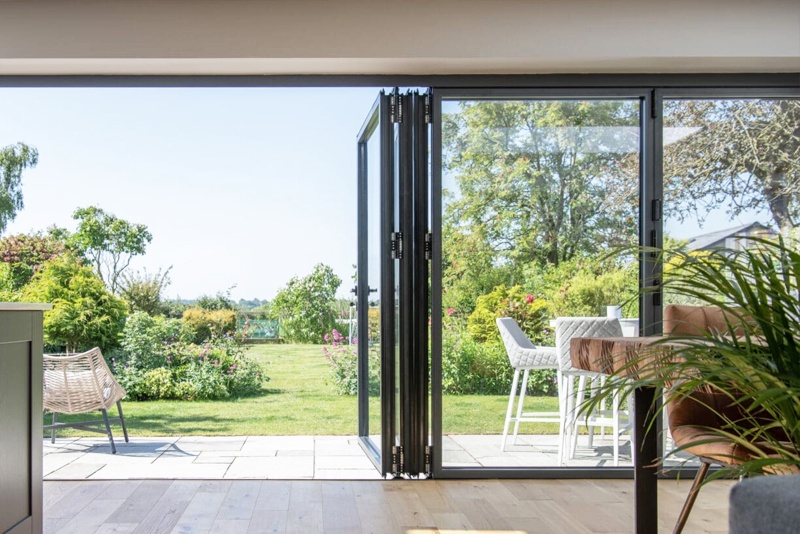
A Framework for Specifying High-Performance Aluminum Folding Doors
The specification of a major opening is a consequential decision. It determines how a building interacts with its environment, manages energy, and accommodates human flow. In this context, the aluminum folding door has transitioned from an optional feature to a fundamental system for achieving spatial and environmental objectives. For projects where reliability under constant use is critical, commercial aluminum folding doors are specified as a tested assembly. For designs that reject standard modules, custom size aluminum folding doors represent the necessary path from architectural intent to built reality. This document provides a framework for their evaluation and specification, focusing on performance logic, appropriate application, and executional precision. Performance Logic: Evaluating Against Core Criteria Specification should be guided by how a system resolves defined project requirements. The following criteria form the basis for evaluation. Spatial Optimization as a Functional Deliverable The defining characteristic is the system’s impact on usable area. A traditional door’s operation imposes a fixed spatial tax—a swing radius or a sliding panel’s dead zone. A folding door system eliminates this tax. Its panels articulate and stack parallel to the opening, liberating 100% of the threshold for uninterrupted use. This capability transforms functional planning: a training room can incorporate......